
"coffee trade Africa"
1000 article(s) found

Flavor and taste is the most complex Ugandan coffee flavor taste introduction boutique coffee
Uganda is located in East Africa, across the equator, mainly located in the Central African Plateau; there are many lakes and has Lake Victoria, the largest lake in Africa. The territory has high mountains and a mild climate; rainy hills and slopes are suitable for growing coffee; Uganda is the birthplace of Robesta species. The most famous coffee in Uganda is Bugisu Arabica. Bugisu is a province of Uganda because

General knowledge of Coffee introduced by producing countries of International Coffee Organization
International Coffee Organization during the 19th century, coffee became an important international trade because of the large number of demand. It makes most countries earn foreign exchange from coffee export trade as a source of money income for farmers and is an important trade in most countries. Because the split led to changes in prices and product standards, it ended at a conference in New York in 1962.
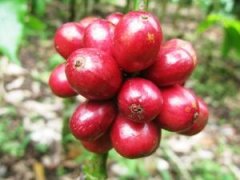
The origin of coffee Africa is the hometown of coffee
The history of coffee, the hometown of African coffee, can be traced back to more than a thousand years ago. The world's first coffee tree was discovered in Ethiopia's KAFFA province in Africa. Local indigenous tribes often grind the fruit of coffee and knead it with animal fat to make many ball-shaped balls, which are used as precious food for soldiers who are about to fight.

Main points of knowledge about coffee raw beans: introduction to the trade of coffee raw beans and text analysis of sack packaging
Previous blog post: the hometown of coffee once introduced that the main production places of coffee in the world are concentrated in the narrow strip with the equator as the center line and latitudes within 25 degrees from north to south, like a belt around the earth, commonly known as the coffee belt (Coffee Belt). Among the more than 60 producing countries in the coffee belt, except for the local consumption in Brazil, the exports of other countries account for a large proportion of the total output.

Kenya Coffee Origin list of Kenya Coffee Manors
Professional coffee knowledge exchange more coffee bean information please follow the coffee workshop (Wechat official account cafe_style) Kenya, the full name of the Republic of Kenya, is located in eastern Africa, the equator runs across the central part of the East African Rift Valley across the north and south. It is bordered by Somalia to the east, Tanzania to the south, Uganda to the west, Ethiopia and Sudan to the north, and the Indian Ocean to the southeast. Multiple plateaus in the territory, average

Introduction to the flavor description method of Starbucks Uganda boutique coffee beans
Uganda Coffee Bean Edition main Note: over the past half a century, the prices of primary products on the world market have been falling, and the incomes of farmers in developing countries have been deteriorating. Take coffee as an example. In Asia, Africa, Latin America and other places, there are 20 million to 25 million farmers and growers directly engaged in the coffee industry, and coffee export income is directly related to their survival. But in recent years, although coffee has become

What's the story of Ethiopian coffee? the story of Ethiopian Coffee and Starbucks
Professional coffee knowledge exchange more coffee bean information please follow the coffee workshop (Wechat official account cafe_style) Starbucks, which has been the king of the world in recent years. To become a well-known fashion brand, in order to arouse the recognition of more consumers with the power of consumption, Starbucks proposed a commitment to the producing area of caffeine (Commitment to Origins; referred to as CTO) in 2003, and promoted

Ethiopian Coffee introduction one of the major producers of Arabian coffee in Africa
Ethiopia is one of the major producers of Arabica coffee in Africa, producing the best Arabian coffee in the world. It is said that coffee was first discovered by shepherds in Essekafa, and the name of coffee evolved from Kafa, so Essex is still the hometown of coffee. The geographical environment of coffee production and processing is very suitable for coffee growth. Coffee is mainly cultivated.

Yemeni mocha coffee is the first country to mass-produce coffee as a crop.
Professional coffee knowledge exchange more coffee bean information please follow Coffee Workshop (Wechat official account cafe_style) the world's three major coffee growing areas: Africa, Indonesia and Central and South America. Yemen was the first country in the world to produce coffee as a crop on a large scale. The cultivation and treatment of mocha coffee in Yemen today is the same as that of hundreds of years ago.

Coffee can also be used as cash? Why fewer and fewer people grow coffee in Yemen
Professional baristas exchange please follow the coffee workshop (Wechat official account cafe_style) Coffee Molecular Science uncover the mystery Yemen is actually located in the Arabian Peninsula of the Asian continent, but it is very close to Africa as long as it crosses the Red Sea and the Gulf of Aden to Gulf of Aden, but other Arab countries do not produce coffee, so the world classifies Yemeni coffee as North Africa.

Yemeni mocha coffee brand recommended mocha java is Yemen Robusta coffee beans?
Professional coffee knowledge exchange More coffee bean information Please pay attention to coffee workshop (Weixin Official Accounts cafe_style) Yemen coffee lovers must know that coffee was first discovered in Ethiopia in Africa, but it is Yemen that really makes coffee flourish. Around the beginning of the 17th century, Yemen's port of Mocha was a prosperous trading port.

Rwanda IGIHANGO Women's Women's League Coffee Bean Story _ Rwanda Micro batch Coffee Bean
Professional coffee knowledge exchange more coffee bean information please follow the coffee workshop (Wechat official account cafe_style) Rwanda is located in the heart of the interior of Africa, its mountain terrain is fertile land, as well as ancient traditional bourbon species, indicating that the natural environment needed to grow quality coffee beans can be found everywhere in Rwanda. Coffee was introduced to Rwanda by German missionaries in 1904, 1930.

Shanghai Free Trade Experimental Zone Coffee Trading Center
The coffee trading center of the Shanghai Free Trade Experimental Zone, which arises at the historic moment from Yunnan-Shanghai business cooperation, has been checked and accepted by the Municipal Commercial Commission, the Municipal Finance Office, the Free Trade pilot Zone Management Committee, and other units. In the near future, it will trade and display from offline to online to the whole world. Since the coffee trading center of Shanghai Free Trade Experimental Zone has been accepted by relevant departments for business cooperation between Yunnan and Shanghai for one year, the two sides have established interconnection.
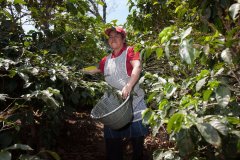
A cup of Fairtrade coffee gives coffee farmers in Central and South America a democratic dream.
Professional baristas exchange please pay attention to coffee workshop (Wechat official account cafe_style) Fair Trade is a consumer movement initiated by European and American non-profit organizations. Fifty or sixty years ago, they felt that bananas, coffee and other bulk substances that had been widely used in their lives for a long time came from poor third World countries, but the wages of local farmers were far lower than the poverty line, so they initiated their own initiative.

Africa Ethiopia five fine coffee producing areas Sidama coffee Ye Jia Xue Fei flavor characteristics
Professional barista exchanges, please pay attention to coffee workshop (Weixin Official Accounts cafe_style) Ethiopia Yirgacheffe Adado Treatment Plant G1 (Ethiopia Yirgacheffe Adado G1 Washed) Production area: Yirgacheffe Variety: Local native species (Typica Heirloom) Producer: Adado Cooperative Treatment Plant Elevation:

Description of taste and flavor of Ugandan coffee beans introduction of grinding scale treatment in producing areas
Uganda coffee bean taste description grinding scale treatment method Uganda coffee growing industry is one of its export pillar industries, Uganda is the birthplace of Robsta in Africa, just as Ethiopia is the native place of Arabica coffee. Robster coffee was first found in Uganda. So far, Uganda has a history of growing coffee for more than 100 years. The output is second to none.

A detailed introduction to the historical development and content of Fairtrade coffee certified by coffee beans in the world
Fairtrade coffee is mainly traded directly with local coffee farmers at a fair price. In a transparent management model and commercial form. The premise of ensuring the working environment of producers and protecting the local environment. At the same time, provide corresponding production technology and training, build bridges, schools, hospitals and other facilities. The aim is for sustainable development and poverty alleviation. Directory background

Start with coffee beans (29)-Africa-Kenya
Rare good coffee-famous for its rich aroma and balanced acidity. People in the coffee industry all think that Kenyan coffee is one of its favorite products, because Kenyan coffee contains every feeling we want from a good cup of coffee. It has wonderful and satisfying aromas, well-balanced acidity, well-proportioned particles and excellent fruit flavors. Coffee

Ugandan coffee beans with silky texture and rich taste introduce fine coffee.
Bujisu is a region of Uganda; because of its unique volcanic ash cultivation, the Arabica of this region has a very outstanding flavor; therefore, it is grouped into a separate category and is named Bujisu. Bugisu AA is fragrant, soft and sour, impressively bitter and sweet, accompanied by a comfortable chocolate taste. Silky texture, rich taste, mellow, with lazy and charming temperament. Off

Coffee also needs the justice documentary "Black Gold".
Professional coffee knowledge exchange more coffee bean information please follow the coffee workshop (Wechat official account cafe_style) how much do you think a cup of coffee we drink every day costs? In fact, a $3 cup of coffee may go into the pockets of coffee farmers for less than 3 cents. Directed by Nick Francis and Mark Francis, it took two and a half years to film since 2003.